THE WIKI
Your guide to the World of Clash
Track Your Clash of Clans Collection
Want to check which decorations, obstacles, hero skins, or sceneries you are missing? Upload your player data to see your completion progress!
Open the Collection Tracker →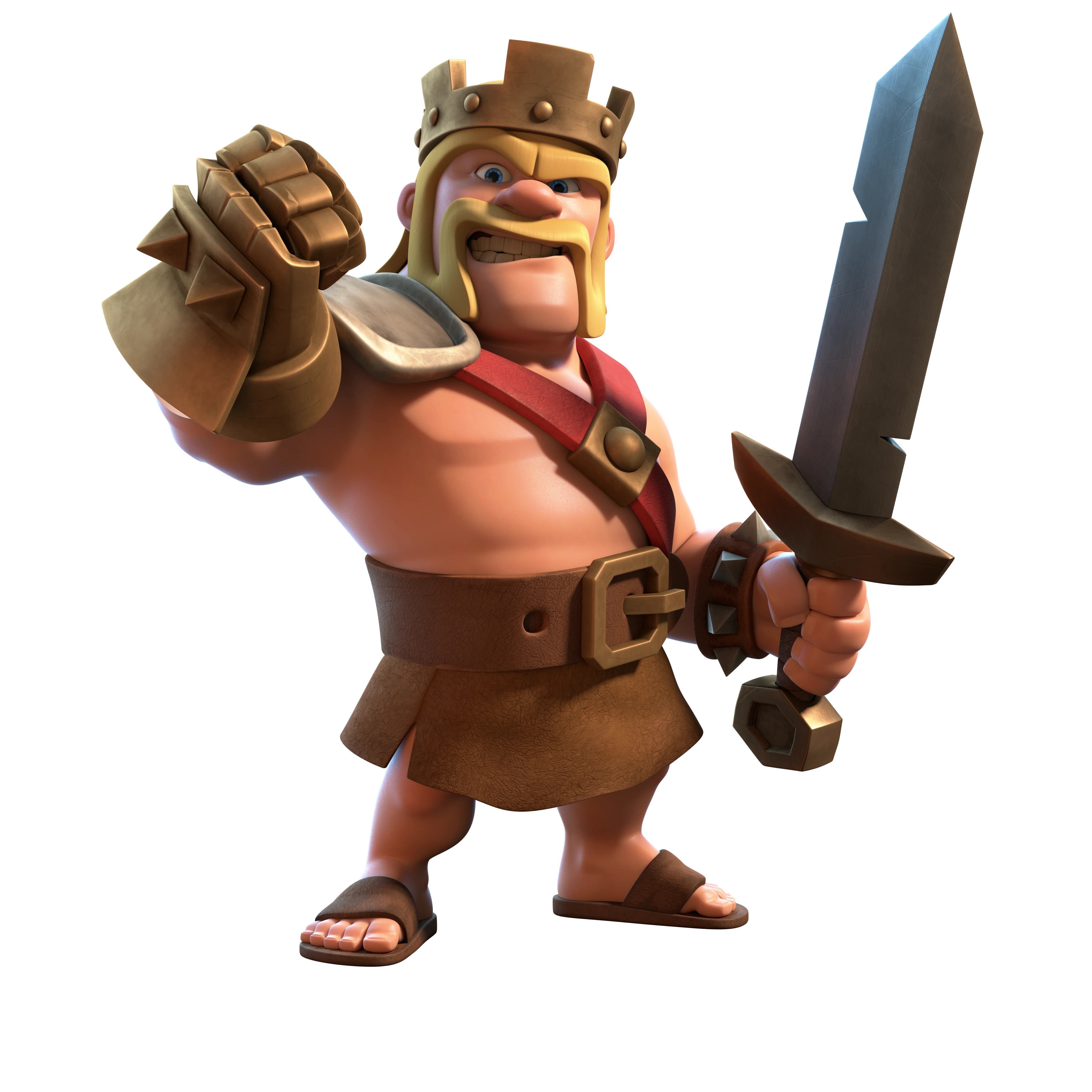
Hero Skins
Complete catalog of every Hero Skin ever released. Check rarities, release dates, and sets.
Explore Skins →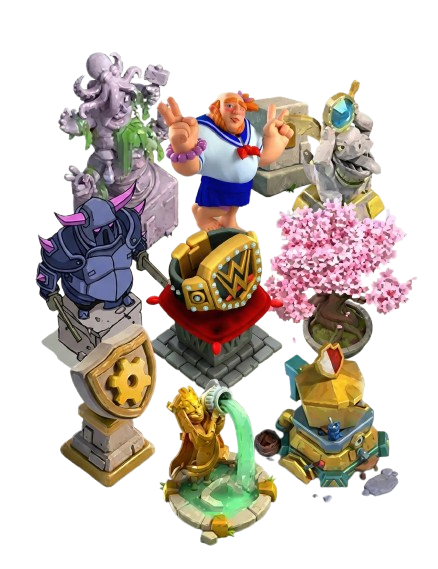
Decorations
From the Ancient Skull to the latest event statues. Discover the history of village aesthetics.
View Decorations →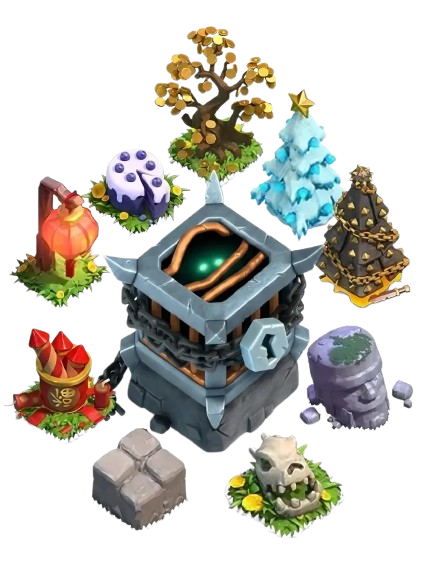
Obstacles
Trees, rocks, and seasonal spawns. Learn about spawn rates, removal rewards, and special obstacles.
View Obstacles →The Complete Guide to CoC Cosmetics
Clash of Clans launched in August 2012 and has spent the years since building one of the most expansive cosmetic libraries in mobile gaming. What began as a purely bare-bones village builder has evolved into a game where visual identity matters deeply — your hero skins, your village scenery, the decorations dotting your base, and even the seasonal obstacles growing in your corners all tell a story about when you played, what you earned, and what you valued as a collector.
This Wiki is your complete reference for all of it. Whether you're trying to identify a specific skin from a screenshot, learn the history behind a seasonal decoration, or figure out which obstacles can still be obtained today — this is the place to start.
A Brief History of Hero Skins
Hero skins in Clash of Clans were introduced relatively late in the game's lifecycle, but quickly became its most beloved cosmetic category. The very first hero skin — Royal Ghost for the Barbarian King — arrived during the 2018 Halloween event and was only obtainable by completing specific event challenges.
Obstacles: The Hidden Collectibles
Many players chop obstacles down and never think twice — but for collectors, obstacles are one of the most fascinating categories in the game. Unlike hero skins or decorations, obstacles spawn naturally in your village over time, meaning you can't simply buy them.
Quick Facts
- Clash of Clans first launched on the App Store on August 2, 2012.
- The Barbarian King was the first hero, introduced in October 2013.
- The Archer Queen followed shortly after in November 2013.
- The Grand Warden arrived with Town Hall 11 in December 2015.
- The Royal Champion debuted with Town Hall 13 in December 2019.
- The Minion Prince was added in November 2024 as part of the Town Hall 17 update.
- The Dragon Duke is the newest hero, introduced in February 2026.
- There are over 70 sceneries in the game as of 2026.